
Ptosis Repair
Droopy Eyelid Repair by Oculoplastic Specialist Dr. Maria D. Garcia
Ptosis Repair: At a Glance
- Procedure Duration: 45–90 minutes
- Setting: Outpatient procedure
- Anesthesia: Local with oral sedation (most cases)
- Return to desk work: 5–7 days
- Average Cost: $4,500–$7,500
- Insurance: Often covered if vision is impaired
What Is Ptosis?

What Causes Ptosis?
- Age-Related: Most common, occurs due to levator stretching.
- Congenital: Present at birth.
- Mechanical: Physical issues impeding eyelid function like heavy eyelid, tumor, or scarring.
- Neurologic: Caused by conditions like myasthenia gravis, Horner syndrome, and nerve palsy.
- Postsurgical: E.g., after cataract surgery (very rare)
The Consultation Process at The Oculofacial Studio
- MRD1 measurement
- Levator function measurement (normal: 12–15 mm)
- Visual field testing
- Photography & Symmetry Analysis
The Procedure
Surgical Techniques Used by Dr. Maria D. Garcia
Levator Advancement (Most Common)
- Tightens stretched tendon
- Internal or external approach
- Best for age-related ptosis
Müller Muscle-Conjunctival Resection (MMCR)
- Internal, no visible scar
- For mild to moderate ptosis
- Good response to phenylephrine test
Frontalis Sling
- For poor levator function (<4 mm)
- Uses silicone or fascia lata
Surgery Day
Ptosis Repair Recovery Timeline
Days 1–3
Week 1
Week 2
4 Weeks to 3 Months
Why Choose The Oculofacial Studio for Ptosis Repair?
- She specializes in eyelid surgery, not general plastic surgery
- Her expertise focuses exclusively on periocular anatomy
- She balances functional results with a natural aesthetic outcome
- Every element of your procedure is adjusted for your case
- Attentive care and patient follow-up reduce the risk of complications

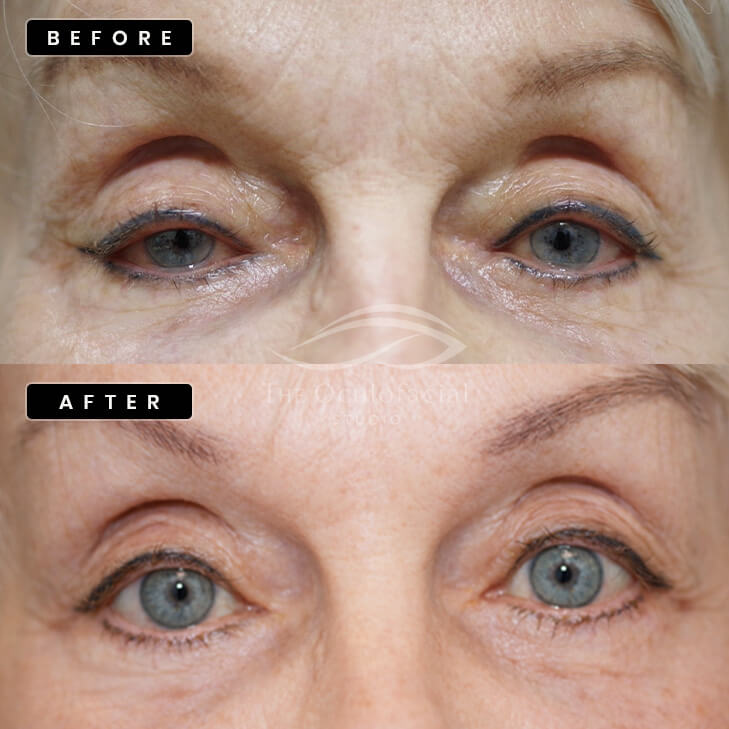
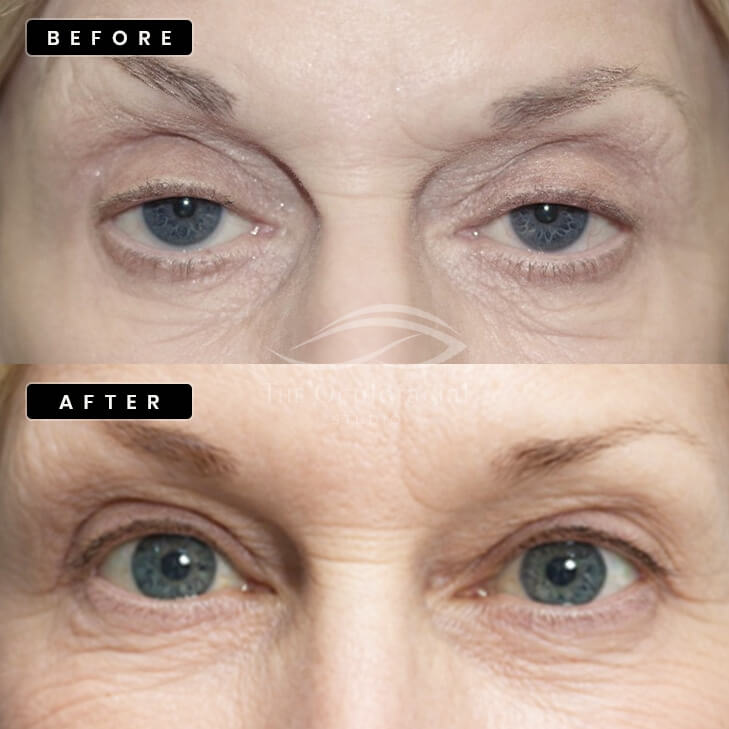
Ptosis Repair Before & Afters
Ptosis Repair FAQs
Am I a candidate for ptosis repair?
Most patients who have ptosis will qualify for a repair procedure. The evaluation explores three main factors for candidates:
- If ptosis is in fact the diagnosis (e.g., instead of dermatochalasis)
- Whether their symptoms qualify as needing a medical procedure
- If they are in good enough health for surgery
What are the risks of ptosis repair?
Any surgical procedure will carry some degree of risk. With ptosis repair, general complication rates are very low, and working with a board-certified surgeon further improves your safety. Some of the risks of ptosis repair include:
- Undercorrection (5–10%)
- Overcorrection (<5%)
- Asymmetry
- Dry eye symptoms
- Temporary lagophthalmos
Will droopy eyelid repair qualify for insurance coverage?
Ptosis often causes functional impairment, which can qualify the repair procedure for insurance coverage. Generally, insurance plans require documentation of:
- MRD1 ≤ 2 mm
- Superior visual field loss ≥ 12 degrees or 30%
- Symptoms such as brow strain or visual obstruction (photographic).
How much does ptosis repair cost?
Typical self-pay ranges from $4,500–$7,500 for one eyelid and $6,500–$9,500 for both. The complexity of the procedure is the main driving factor for the final price. Light ptosis can often be corrected with simpler techniques. Alternatively, severe ptosis or a revision procedure can involve highly complex methods.
When we provide a quote after your consultation, it will have transparent pricing for all cost elements. These include:
- Procedure costs
- Facility fees (when applicable)
- Anesthesia
Is ptosis repair painful?
Ptosis repair surgery tends to be a well-tolerated experience for patients. Local anesthetic minimizes any discomfort during the actual procedure. While pain is present after the procedure, patients report it:
- Typically being a 2–4 on a 10-point scale
- Lasting only 3 to 5 days
- Being readily controlled with over-the-counter pain relievers
How long does swelling last?
- Initial swelling improves significantly by 10–14 days.
- Minor swelling can persist up to 6 weeks.
- Residual (nonvisible) swelling can settle after a few months.
Can ptosis come back?
Ptosis recurrence largely depends on the patient’s health and the cause of their original ptosis. Recurrence rates are lowest when:
- Patients work with a skilled surgeon
- Patients carefully follow postprocedure instructions
What happens if ptosis is not treated?
Can ptosis repair be combined with blepharoplasty?
Will I have visible scars?
How long do results last?

Schedule Your Consultation
Maria D. Garcia, M.D.
If you are considering eyelid surgery, a personalized consultation with Dr. Garcia is the first step in determining the best approach for your desired results.